
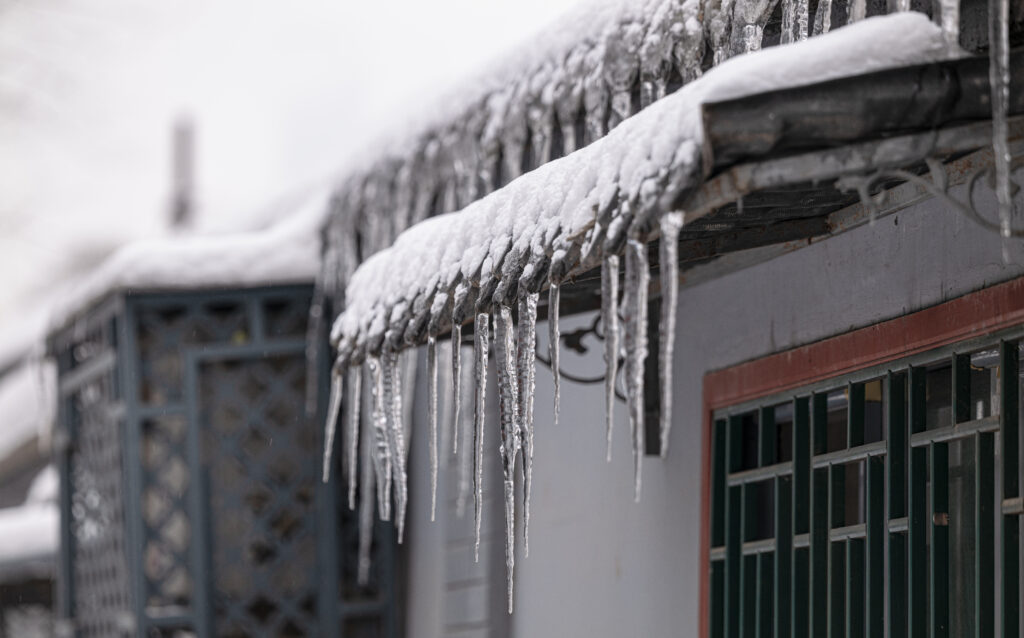
When icicles hang thick along the eaves, that “winter postcard” look can signal a real roof problem: ice dams. They form when heat leaking from the home warms the roof deck, melts the snow, and the water refreezes at the colder eaves—backing up under shingles and into the house. In New England, where freeze–thaw cycles and coastal storms are routine, prevention is far cheaper than midwinter repairs.
Context and Analysis
How ice dams really form:
- It takes three things:
- Snow on the roof
- Heat loss through the ceiling/attic
- Below‑freezing eaves
- As meltwater refreezes at the edge, a ridge of ice traps more water that can leak into the home.
- Even well‑detailed roofs can see ice dams from uneven sun exposure or variable snow depth, so prevention relies on both building‑science fixes and smart backup waterproofing.
What actually works (and why)
- Air sealing first: Stop warm, moist air from reaching the attic by sealing penetrations at top plates, recessed lights, bath fans, chimneys, and attic hatches. This is the single most important step.
- Right‑sized insulation: Bring attic insulation up to cold‑climate levels and ensure full depth over exterior walls (raised‑heel trusses or insulation blockers help at the eaves). Continuous air barrier + continuous insulation = a cold roof deck that doesn’t melt snow.
- Balanced ventilation: Keep soffit intakes clear with baffles and pair them with a continuous ridge vent so cold outdoor air washes the underside of the roof deck. Ventilation complements air‑sealing/insulation—it doesn’t replace them.
- Eave protection: In cold regions, codes commonly require a self‑adhered ice‑barrier membrane along eaves as a last line of defense if ice does form.
Why act before the first snowfall
- Ice dams are a top cause of winter leaks in New England—issues that are largely preventable when the attic and eaves are addressed before snow arrives.
Smart homeowner moves this fall
- Book a roof/attic diagnostic: Ask for photo‑documented findings on air leaks, insulation depth (especially over exterior walls), and soffit/ridge airflow.
- Clear pathways: Make sure soffit vents aren’t blocked by insulation; add baffles where needed.
- Plan upgrades together: Pair any roof work with targeted air‑sealing and insulation so the system performs as a whole. Add or confirm self‑adhered membrane at eaves and other critical areas.
- Avoid risky “quick fixes”: Chipping ice can damage shingles; heavy salts can stain or harm landscaping. If removal is needed mid‑season, consider professional steaming and address root causes when conditions allow.
Key Takeaways
- Ice dams are a building‑science problem with a building‑science solution: air sealing + insulation + balanced ventilation.
- Add eave ice‑barrier membrane as backup; even good roofs can see dams from uneven melt.
- Act now—before the first storm—so winter moisture stays outside where it belongs.